In today’s startup world, venture capital and angel funding often steal the spotlight. Headlines frequently highlight billion-dollar funding rounds and unicorn valuations. However, some of the most successful and sustainable businesses were built without external funding. These are known as bootstrapped startups.
Bootstrapped startup success stories matter because they prove that smart execution, discipline, and customer focus can outperform heavy funding. For entrepreneurs who lack access to investors or prefer full control over their business, bootstrapping offers a powerful and realistic path to long-term success.
This article explores what bootstrapping means, how it works, its advantages and limitations, real-world success stories from India and around the world, and practical lessons every founder can apply.
What Is a Bootstrapped Startup?
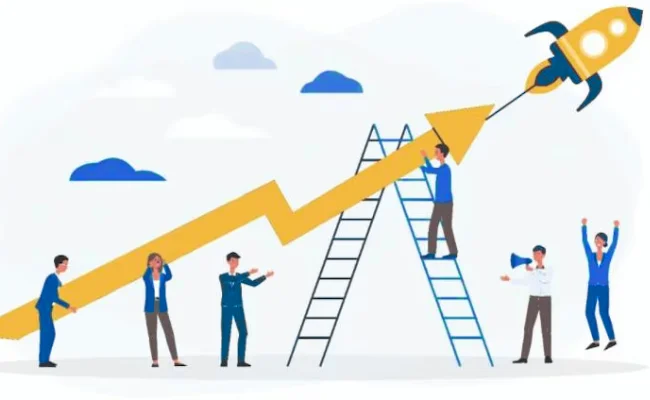
A bootstrapped startup is a business that is built using the founder’s own savings, revenue generated from customers, or minimal personal resources — without raising money from investors.
In simple terms:
- No venture capital
- No angel investors
- No external equity funding
The startup grows by reinvesting profits, controlling costs, and focusing on customers from day one.
Bootstrapping forces founders to be efficient, disciplined, and deeply connected to real market demand.
How Bootstrapped Startups Work
Bootstrapped startups follow a different growth model than funded companies. Here’s how the process typically works:
1. Start Small With a Real Problem
Founders begin with a clearly defined problem and build a minimum viable product (MVP) that customers are willing to pay for.
2. Self-Fund the Initial Phase
Early expenses are covered through:
- Personal savings
- Side income
- Freelancing or consulting
- Early customer payments
3. Generate Revenue Early
Unlike funded startups that chase growth first, bootstrapped startups prioritize revenue from day one.
4. Reinvest Profits
All earnings are reinvested into:
- Product improvement
- Hiring slowly
- Marketing and operations
5. Scale Sustainably
Growth happens gradually, guided by cash flow rather than investor pressure.
Benefits of Bootstrapped Startups
Bootstrapping offers several long-term advantages:
✅ Full Ownership & Control
Founders retain 100% equity and make decisions independently.
✅ Financial Discipline
Limited funds force smarter spending and lean operations.
✅ Customer-First Mindset
Revenue comes from customers, not investors — leading to better products.
✅ Long-Term Stability
Bootstrapped businesses often survive longer because they don’t rely on continuous funding rounds.
✅ Flexibility in Vision
Founders are not pressured to chase unrealistic growth targets.
Limitations of Bootstrapping
While powerful, bootstrapping also has challenges:
❌ Slower Growth
Limited capital may slow expansion compared to VC-funded competitors.
❌ Personal Financial Risk
Founders often invest personal savings, increasing stress.
❌ Limited Hiring Power
Hiring top talent may take longer due to budget constraints.
❌ Scaling Challenges
Entering new markets or launching aggressively can be difficult without capital.
Understanding these limitations helps founders plan realistically.
Bootstrapped Startup Success Stories (India)
1. Zoho (India)
Industry: SaaS / Enterprise Software
Founded by: Sridhar Vembu
Zoho is one of India’s most famous bootstrapped success stories. The company never raised venture capital and grew entirely through customer revenue. Today, Zoho serves millions of users worldwide and competes with global giants like Salesforce.
Key lesson: Focus on product excellence and long-term thinking.
2. Zerodha (India)
Industry: Fintech / Stockbroking
Founded by: Nithin Kamath
Zerodha disrupted India’s stock trading industry with a low-cost, transparent pricing model. Built without VC funding, it became India’s largest stockbroker by active users.
Key lesson: Solve a real customer pain point with simplicity and trust.
3. Freshworks (Initially Bootstrapped)
Industry: SaaS / Customer Support
Founded by: Girish Mathrubootham
Freshworks started as a bootstrapped company focused on SMB customers. It later raised funding, but its early bootstrapped phase built strong fundamentals that helped it scale globally.
Key lesson: Early revenue focus builds a strong foundation.
Bootstrapped Startup Success Stories (Global)
1. Basecamp (USA)
Industry: Project Management Software
Basecamp is a globally recognized bootstrapped SaaS company known for its profitability, remote culture, and sustainable growth.
Key lesson: Growth doesn’t have to be aggressive to be successful.
2. Mailchimp (USA)
Industry: Email Marketing
Mailchimp was bootstrapped for nearly two decades before being acquired for billions. It focused on small businesses and built revenue steadily without external funding.
Key lesson: Patience and customer loyalty can create massive value.
3. GitHub (Initially Bootstrapped)
Industry: Developer Tools
GitHub started as a bootstrapped project by developers solving their own problem. It later raised funding and was eventually acquired by Microsoft.
Key lesson: Build for users first, monetization will follow.
Practical Tips for Building a Bootstrapped Startup
- Start With Paying Customers: Don’t wait for perfection — launch early.
- Control Costs Ruthlessly: Avoid unnecessary tools, office space, or hires.
- Focus on Profitability: Revenue is oxygen for bootstrapped startups.
- Use No-Code & Low-Cost Tools: Save time and money during early stages.
- Build a Strong Network: Mentors and peers can replace expensive consultants.
Common Mistakes Bootstrapped Founders Make
- Trying to Scale Too Fast: Growth without cash flow can kill the business.
- Ignoring Marketing: Great products still need visibility.
- Doing Everything Alone: Delegation and partnerships matter.
- Underpricing Products: Fear of charging often leads to burnout.
- Comparing With VC-Funded Startups: Different models require different benchmarks.
Future Outlook of Bootstrapped Startups
The future looks promising for bootstrapped startups due to several trends:
- Rise of SaaS & Digital Tools: Lower startup costs enable bootstrapping.
- Remote Work Culture: Reduced overhead expenses.
- Creator Economy & Indie Hackers: Solo founders building profitable businesses.
- Founder Preference for Control: Many entrepreneurs now value independence over funding.
Bootstrapping is increasingly seen as a strategic choice, not a limitation.
Frequently Asked Questions (FAQs)
- Can a bootstrapped startup become a unicorn?
Yes, though rare. Zoho and Zerodha prove that massive scale is possible without VC funding.
- Is bootstrapping better than venture funding?
Neither is better universally. Bootstrapping suits founders who value control and sustainability.
- How long does it take to succeed with bootstrapping?
Bootstrapped success usually takes longer but results in stronger fundamentals.
- Can bootstrapped startups raise funding later?
Yes. Many startups bootstrap initially and raise funding after achieving traction.
- Which industries are best for bootstrapping?
SaaS, digital services, content platforms, and consulting-based models work well.
Conclusion: Why Bootstrapped Success Stories Matter
Bootstrapped startup success stories prove that capital is not the only path to building a great company. With focus, discipline, customer obsession, and patience, founders can build profitable and impactful businesses without giving up control.
For aspiring entrepreneurs, bootstrapping offers freedom, resilience, and long-term sustainability. In a world obsessed with funding rounds, these stories remind us that real success comes from value creation, not valuation.