India is one of the world’s fastest-growing exporters, with global demand rising for everything from textiles, handicrafts, and spices to engineering goods, pharmaceuticals, and technology services. But starting an export business can feel overwhelming if you don’t know where to begin. In this article, we’ll walk you through the entire journey — step by step, with practical insights, legal requirements, marketing strategies, and tips for long-term success.
Whether you’re a small manufacturer, an artisan, or a start-up looking to go global, this guide will help you transform your export aspirations into reality.
📌 Step 1: Understand What Export Business Means
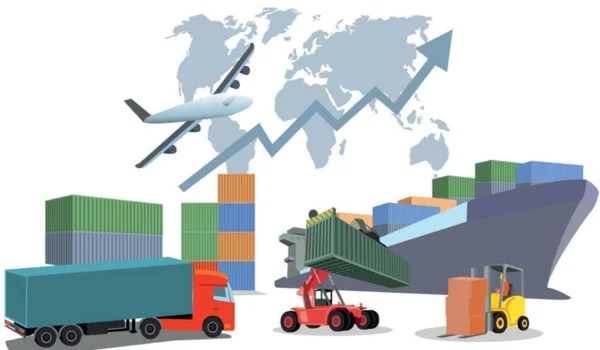
An export business involves selling Indian goods or services to buyers located outside the country. Unlike selling within domestic markets, exporting requires adherence to international standards, documentation, compliance, and logistics management.
From the outset, it’s crucial to treat your export venture as a global commercial activity — with unique rules, payment systems, customs requirements, and buyer expectations.
🧱 Step 2: Legal Registration and Business Setup
Before you export a single product, you must legally register your business in India:
🔹 Choose Your Business Structure
You can start as a:
- Sole Proprietorship
- Partnership
- Limited Liability Partnership (LLP)
- Private Limited Company
Each structure offers different benefits in terms of liability, taxation, and scalability. For example, a Pvt. Ltd. firm provides credibility with foreign buyers when compared to sole proprietorship.
🔹 Obtain Key Registrations
You’ll need:
✔ Permanent Account Number (PAN) — required for taxation.
✔ GST Registration — mandatory if you exceed turnover limits; ensures you can issue valid tax invoices even for exports.
✔ Current Bank Account — in your business name with a bank authorised to handle foreign exchange transactions.
📜 Step 3: Get Your Importer-Exporter Code (IEC)
The Import-Exporter Code (IEC) is the most critical license for any export business in India. Without it, you cannot legally export anything or receive foreign payments.
- It is a 10-digit unique code issued by the Directorate General of Foreign Trade (DGFT).
- The process is online, straightforward, and usually completed in under two weeks.
- Documents required include your PAN card, business address proof, bank account details, and ID proofs.
Once obtained, the IEC remains valid for a lifetime, and you can use it for export/import activities across all your business locations.
🧾 Step 4: Additional Registrations — RCMC & EPCs
To get government support, incentives, and market development assistance, most exporters benefit from registering with:
- Export Promotion Councils (EPCs) — industry bodies that boost exports, organise trade fairs, and provide market insights.
- Registration-cum-Membership Certificate (RCMC) — required to avail government incentives under India’s Foreign Trade Policy.
For example, APEDA (agri products), FIEO (general exports), EEPC (engineering), and GJEPC (gem & jewellery) are prominent councils you can join.
🔎 Step 5: Choose the Right Product to Export
Selecting the right export product is a foundational decision. India has global demand in areas such as:
- Textiles and garments
- Handicrafts and artisanal goods
- Spices and organic foods
- Pharmaceuticals and healthcare products
- Engineering and automotive components
- IT and digital services
Study international trends, demand cycles, and pricing before you commit. Tools like Government export data, Trade Map, and IndiaTradePortal can help identify products with high global demand (e.g., markets in the Middle East, Europe, or North America).
🌍 Step 6: Conduct International Market Research
Picking a product is just half the battle — you must identify the right markets too. Ask:
✔ Which countries demand my product?
✔ What are their quality, labelling, and compliance requirements?
✔ How are competitors priced?
✔ Do trade agreements offer tariff benefits?
You can get market data from Indian Missions abroad, EPCs, and government trade bodies. Researching markets not only helps pricing and packaging, but also allows you to identify payment terms and logistical requirements early in the process.
📦 Step 7: Prepare Export Documentation
Exporting requires a set of mandatory documents that ensure compliance, customs clearance, and payment. Some of the most commonly required ones include:
- Commercial Invoice — details of sale and pricing.
- Packing List — itemised list of shipped goods.
- Shipping Bill — key customs document prepared on ICEGATE.
- Bill of Lading / Air Waybill — provided by the carrier.
- Certificate of Origin — verifies where the goods were produced.
- Bank Realisation Certificate (BRC) — confirms payment receipt from abroad.
Each document plays a specific role across compliance, customs clearance, and payment realisation.
🚢 Step 8: Logistics, Transport & Packaging
Efficient logistics is the backbone of successful exports. You must consider:
- Mode of transport — air (fast but expensive), sea (cost-effective for bulk), or multimodal.
- Packaging standards — must comply with destination country rules (including product labelling).
- Insurance — protect goods in transit from damage, theft, or loss.
Many new exporters work with freight forwarders or customs brokers to simplify this complex process and avoid costly delays.
💱 Step 9: Decide Your Payment Terms
International transactions involve foreign exchange risk and require solid payment terms to protect your business. Common options include:
- Advance Payment — safest for new exporters.
- Letter of Credit (LC) — bank-guaranteed payment upon fulfilment of terms.
- Document Against Payment (DP) — buyer pays on presentation of documents.
Choosing the right term affects cash flow and risk management. Always weigh factors such as exchange rate, bank charges, and customs duties when finalising.
📈 Step 10: Marketing & Finding Buyers
Finding reliable international buyers is often the hardest part of starting an export business. Here’s how you can find buyers:
✔ Participate in trade fairs and exhibitions — a traditional yet effective method.
✔ Use B2B marketplaces like Alibaba, IndiaMART, TradeIndia, Global Sources to connect with buyers globally.
✔ Leverage EPC networks and consular trade offices of Indian embassies.
✔ Develop a professional website with multilingual catalogues and clear pricing and terms.
Persistence, networking, and reliability help secure repeat orders — which are vital for growth.
📌 Step 11: Avail Export Benefits & Incentives
India’s government offers several incentives to make exports competitive:
- RoDTEP (Remission of Duties and Taxes on Export Products) — reimburses certain embedded taxes (extended through March 2026).
- Interest subvention and collateral support schemes — to reduce financial costs for exporters.
Understanding these schemes and using them effectively can improve profit margins and reduce financial risk.
🧠 Final Thoughts
Starting an export business in India is a rewarding but meticulous journey. From business registration and IEC licensing to market research, documentation, logistics, and buyer discovery, each step requires careful planning and strategic thinking. But with the right preparation, the global market offers huge potential — whether you’re shipping organic spices, tech services, or handcrafted jewellery.
Exporting isn’t just about selling overseas — it’s about building global trust, managing cross-border compliance, and delivering quality consistently. If you stay informed, leverage government support, and position your products smartly, you can grow your export venture into a strong international brand.