India is rapidly emerging as a global startup hub. To support innovation at the grassroots level, especially among students, the Government of India has taken several progressive steps. One of the most important initiatives in this direction is the Student Startup and Innovation Policy 2.0 (SSIP 2.0).
This policy aims to create a strong ecosystem in educational institutions where students are encouraged to think innovatively, start startups, and convert ideas into successful enterprises. In this detailed guide, we will explain what Student Startup and Innovation Policy 2.0 is, why it matters, how it works, its benefits, challenges, and future scope—in a simple and easy-to-understand way.
What is Student Startup and Innovation Policy 2.0?
The Student Startup and Innovation Policy 2.0 (SSIP 2.0) is an upgraded framework designed to promote innovation, entrepreneurship, and startup culture among students in Indian educational institutions.
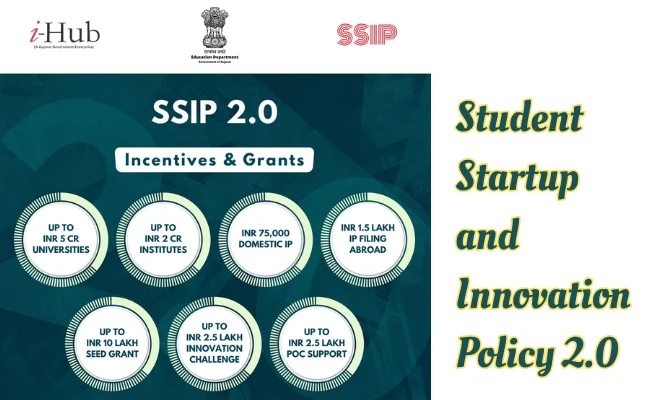
It builds upon the earlier Student Startup Policy and aligns closely with national initiatives such as:
- Startup India
- Atmanirbhar Bharat
- National Education Policy (NEP) 2020
- Digital India
SSIP 2.0 encourages institutions to act not only as teaching centers but also as innovation hubs where students can ideate, experiment, fail, learn, and finally build scalable startups.
Why Student Startup and Innovation Policy 2.0 is Important
Traditional education systems mainly focus on degrees and jobs. SSIP 2.0 shifts this mindset by promoting:
- Job creators instead of job seekers
- Practical learning instead of rote learning
- Innovation-driven education
- Early exposure to entrepreneurship
With rising unemployment and rapid technological change, student-led startups can play a crucial role in economic growth and employment generation.
Key Objectives of Student Startup and Innovation Policy 2.0
The main objectives of SSIP 2.0 are:
- To create an innovation-friendly ecosystem in campuses
- To support student startups at early stages
- To encourage research, design thinking, and problem solving
- To allow students to pursue startups alongside academics
- To strengthen industry-academia collaboration
Who Can Benefit from SSIP 2.0?
SSIP 2.0 is beneficial for:
- Undergraduate and postgraduate students
- PhD and research scholars
- Faculty members and mentors
- Technical and non-technical institutions
- Incubators and innovation cells
Importantly, students from all disciplines—engineering, management, arts, science, commerce—can participate.
Key Features of Student Startup and Innovation Policy 2.0
- Institutional Innovation Councils (IICs)
Institutions are encouraged to establish Innovation and Entrepreneurship Cells or IICs to:
- Conduct innovation activities
- Organize hackathons, ideathons, bootcamps
- Mentor student startups
These councils act as the backbone of SSIP implementation.
- Academic Flexibility for Student Entrepreneurs
One of the most student-friendly features of SSIP 2.0 is academic flexibility:
- Students can earn credits for startup work
- Internships can be replaced with startup activities
- Attendance relaxation for startup founders
- Option to pause studies temporarily (with safeguards)
This removes the fear of “losing academics” while pursuing entrepreneurship.
- Financial Support & Seed Funding
SSIP 2.0 promotes access to early-stage funding through:
- Institution-level seed funding
- Government grants and schemes
- Incubation center support
- CSR and industry partnerships
This helps students convert ideas into prototypes and products.
- Incubation and Mentorship Support
Institutions are encouraged to:
- Partner with incubators and accelerators
- Provide access to mentors, industry experts, and investors
- Support legal, IP, and business compliance
Strong mentorship significantly increases startup success rates.
- Intellectual Property Rights (IPR) Support
SSIP 2.0 emphasizes awareness and protection of innovation through:
- IPR cells in institutions
- Support for patent filing and copyrights
- Clear revenue-sharing mechanisms
This motivates students to innovate without fear of idea theft
- Industry Collaboration
The policy promotes strong industry-academia collaboration by:
- Encouraging live industry problems
- Industry-mentored projects
- Sponsored research and innovation challenges
This ensures market relevance of student startups.
How Student Startup and Innovation Policy 2.0 Works (Step-by-Step)
- Institution adopts SSIP 2.0 framework
- Innovation/Startup Cell is established
- Students submit ideas or startup proposals
- Ideas are evaluated by experts
- Selected teams receive mentorship and support
- Funding, incubation, and academic support provided
- Startups scale with industry and investor connect
Benefits of Student Startup and Innovation Policy 2.0
For Students
- Hands-on entrepreneurial experience
- Reduced fear of failure
- Financial and mentorship support
- Better employability and leadership skills
For Institutions
- Improved rankings and reputation
- Industry partnerships
- Strong alumni startup network
- Contribution to national innovation goals
For the Economy
- New job creation
- Local problem solving
- Increased innovation output
- Stronger startup ecosystem
Limitations & Challenges of SSIP 2.0
While SSIP 2.0 is progressive, some challenges remain:
- Lack of awareness among students
- Limited funding in smaller institutions
- Shortage of trained mentors
- Resistance to change in traditional academic systems
However, these challenges are gradually being addressed
Real-World Impact of Student Startup Policies in India
Many successful Indian startups began as student ideas, such as:
- EdTech platforms
- HealthTech solutions
- Agri-innovation startups
- FinTech and SaaS tools
SSIP 2.0 aims to multiply such success stories by providing structured support
Role of Faculty Under SSIP 2.0
Faculty members are encouraged to:
- Act as mentors and co-innovators
- Guide research-based startups
- Participate in innovation training
- Collaborate with industry and incubators
Faculty involvement is critical for policy success.
Future Scope of Student Startup and Innovation Policy 2.0
The future of SSIP 2.0 in India looks promising due to:
- Alignment with NEP 2020
- Government focus on startups and MSMEs
- Growth of incubation infrastructure
- Increasing student interest in entrepreneurship
In the coming years, SSIP 2.0 can transform campuses into startup factories.
Frequently Asked Questions (FAQs)
Q1. What is Student Startup and Innovation Policy 2.0?
It is a policy framework to promote innovation and startups among students in Indian institutions.
Q2. Can non-technical students benefit from SSIP 2.0?
Yes, students from all disciplines are eligible.
Q3. Does SSIP 2.0 provide funding?
It encourages seed funding through institutions, government schemes, and incubators.
Q4. Can startups replace internships under SSIP 2.0?
Yes, startup work can be considered equivalent to internships or projects.
Q5. Is SSIP 2.0 mandatory for institutions?
It is recommended and widely adopted, especially by technical institutions.
Conclusion
The Student Startup and Innovation Policy 2.0 is a powerful step toward building an innovation-driven India. By encouraging students to think creatively, take risks, and build startups during their academic journey, the policy bridges the gap between education and entrepreneurship.
For students, SSIP 2.0 opens doors to opportunities beyond traditional jobs. For institutions, it creates a culture of innovation and excellence. And for India, it strengthens the foundation of a self-reliant and startup-driven economy.
If implemented effectively, SSIP 2.0 has the potential to shape the next generation of Indian entrepreneurs